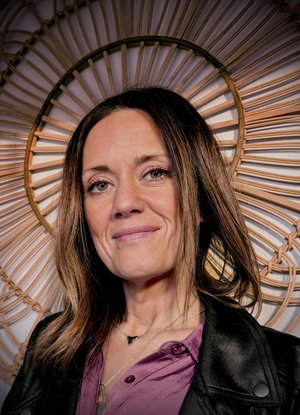
Befriending Grief
A Lesson in Grief, Surrender, and Buoyancy
Our lives consist of only a handful of moments so powerful they become etched into the human psyche. Moments that, if we close our eyes, can transport us back to the very second we first experienced them. Some are filled with awe-inspiring wonderment, joy, “bliss”— moments we collect like priceless treasures, worth more than anything tangible could offer. Then there are the moments that unravel us, abruptly pulling us beneath the surface of the comfort where we once dwelled. The ones that challenge our sanity, our resiliency, our ability to weather life’s fiercest and most unforgiving storms. These moments change us, quietly redirecting the course of who we must become.
We speak of hardship— as though it demands a choice: sink or swim?
But what if our healing journey doesn’t begin with either. What if there is a sacred space in between— a place where you stop fighting and discover the water has been holding you all along. The space of buoyancy. Refusing to sink but unable to swim.
It was an ordinary evening. I stood in my kitchen tidying up the remnants of tiny little hands and mouths at work, finishing up the tasks after a very uneventful day. Life carried a quiet mundanity that, in the seconds that followed, I would miss more than I ever imagined.
My phone rang.
Four Words.
“Your mom passed away.”
Four words that separated my life into the woman I had been seconds before — and the woman I would spend the next several months becoming.
Life has a peculiar way of changing forever while everything around you stays shockingly ordinary, but that ordinary has a way of becoming sacred after tragedy. Whenever I reflect on the months that followed after my mother’s passing I pay attention to where my mind shifts and where those shifts resonate in my body. I search for my truth based on how I feel rather than the mind chatter that attempts to pull me towards a self-imposed idea of where I “should” be. I’m surely not alone here, but once I was able to (somewhat) plant my feet on the ground, after the initial shock of the loss of my mother settled, it was grief everywhere.
My mind.
My interactions.
My algorithm.
My everyday existence.
Grief. Darkness. Pain. Dreary. Blah. Gulp.
I’m a naturally (and overly at times) “rose-colored glasses” kind of soul. Dark humor, love. Laughing through the pain, why not? Saying, “I’m fine”, a badge of honor— or so I thought. But that wasn’t sufficient enough in this chapter. I was drowning. Quite literally unable to breathe at times, flailing throughout my everyday existence, grasping for anything to pull me out of the depth of discomfort, the numbing cold, and the inability to believe I would escape my new found reality.
Do you know why people usually drown?
Because they fight in panic, wasting precious energy and oxygen that forces the body deeper into water. So I quit. I quit fighting. I surrendered. I became buoyant. It felt like defeat, but it became the turning point in my healing journey.
I asserted boundaries, deep breath (an ongoing personal struggle), and no doubt the title of my life memoir. It’s an ongoing practice that still stretches me. I stopped apologizing for my grief and carrying the weight of other people’s comfort alongside my own. I released the impossible expectation that I should somehow return to “normal”, or find a timeline that made my loss seem more acceptable. More acceptable to whom? It was mine to hold. I stopped searching google for a step-by-step guide through grief, hoping someone else had the map.
I quit fighting.
I quit performing.
I quit searching for permission to grieve.
And somewhere in all that quitting, I discovered I wasn’t giving up. I was becoming buoyant. I stepped into something far more honest and I simply existed in my grief.
I accepted it.
I respected it.
I leaned into it.
What a truly remarkable emotion on the human psyche.
Checking in with my body as I type this, I don’t feel grief. I feel calm. I am grounded. I have learned when to swim and when to float, still becoming buoyant when grief returns. My first Mother’s Day— I developed a deep-rooted animosity towards Hallmark. Thanksgiving— I cried into a pie, a whole pie, slices didn’t cut it. Christmas— Ebenezer and I hand in hand. I didn’t fight it, I remained buoyant. Buoyancy carries me in grief. I realized grief is inevitable in life, fighting it, is a choice. I hold gratitude when the water is calm— it’s a comforting familiar back float, basking in the bright, warm glow of sunshine. When the storm comes and the water becomes dangerously choppy, I remain the same, buoyant, knowing fighting only puts my peace, my well-being, and my perseverance at risk. So I float on, letting grief pull me where it needs to until it releases its powerful current.
The late Rabbi Earl Grollman, author and pioneer in the study of death and dying, wrote in Living When a Loved One Has Died, “Grief is not a disorder, a disease, or a sign of weakness. It is an emotional, physical, and spiritual necessity— the price you pay for love. The only cure for grief is to grieve.” Reading those words shifted my entire perspective. I was able to reframe my thoughts. I made friends with the scary monster that had been stalking me in the shadows. Grief is medicine. Grief is attachment. Grief, in its entirety, is our buoyancy through loss. Grief is something I now hold gratitude for, without it, what do we have to carry in its place? Lack of love, lack of attachment, lack of the precious moments we collect like treasures carrying us through a lifetime.
I have a memory etched so deeply of my mother. The feeling of being transported to that exact place in time is surreal. It has and always will be one of the utmost treasures I hold dearly, especially now. I remember every detail, the sounds, the temperature outside, the landmarks of our surroundings. It’s not one of grand adventure, it’s simply us driving when I was ten. I looked at her, windows down, hair amuck, Fleetwood Mac blaring, the sun beating down, reflecting off of her coral lipgloss, and she turned to me and smiled. My heart was overflowing while I admired her in her element. She was so free and beautiful.
I reflect on this memory often because in hindsight throughout the grueling months after her loss I realized this, I would float through a hurricane just to keep that feeling imprinted in my soul. Looking back now, I realize my mother had discovered buoyancy long before I knew to call it that. Life had asked impossible things of her, yet she carried herself with a graceful steadiness, choosing joy over bitterness, light over heaviness, and life over loss. I admired her strength then, but I understand it now. In her passing, she unknowingly left me her greatest inheritance— not freedom from grief, but the quiet wisdom to float through it.
May we all find buoyancy.
With love,
Lexi